


Last Updated: October 25, 2026
Quick Summary
The best budget electronics for home use are smart plugs, LED bulbs, Bluetooth trackers, digital meat thermometers, milk frothers, immersion blenders and compact air fryers, chosen by matching each device to a price tier. Buy for the second and third year, not the first week, and check compatibility, warranty and repairability before ordering.
- Smart plugs are the cheapest way into home automation and should remember schedules after a power cut.
- Bluetooth trackers work within roughly a room or two, which is usually enough for home use.
- A mid-tier video doorbell with local storage is a better long-term buy than the cheapest connected model.
- Replace the lights you leave on longest with LED equivalents first to cut running costs.
- Change default passwords on anything that connects to your network and keep firmware updated.
Table of Contents
- What Makes Budget Electronics Worth Buying
- Budget Smart Home Devices That Earn Their Place
- The Best Affordable Kitchen Gadgets for Daily Cooking
- Energy-Efficient Home Electronics That Cut Running Costs
- An Electronics Buying Guide for Home Use: What to Check First
- Common Mistakes When Buying Cheap Home Electronics
- Stocking Your Home Tech in One Order
- Frequently Asked Questions
What Makes Budget Electronics Worth Buying
Most cheap electronics fail for a boring reason: the buyer picked on price alone. Budget electronics for home use only earn their place when three things line up, namely a clear job to do, a price tier that matches how often you'll use the thing, and a build that survives daily handling. Get those right and a modest device can outlast a pricier one you never switch on.
At Theclothes.club, we stock home and living electronics alongside our fashion and lifestyle ranges. That pattern tells you more about value than any spec sheet.
Below, we'll show you the categories worth your money and the ones to skip.
How We Selected These Devices
Our selection method is deliberately unglamorous. We look at what a device actually replaces, how it's powered, whether it works with the phone you already own, and what happens when it breaks.
A common mistake is buying a cheap device that only works inside one ecosystem. If it can't talk to what you already have, it's not a bargain, it's a paperweight.
The Three Price Tiers That Matter
Think in tiers rather than exact figures, because prices move constantly and we don't publish fixed numbers for our own range. Instead, check current pricing on our site before you buy.
| Tier | What it buys | Best for | Watch out for |
|---|---|---|---|
| Entry | Single-function basics | Testing a habit | Flimsy cables, no warranty paperwork |
| Mid | Smarter features, better build | Daily use | App lock-in, unclear support |
| Upper-budget | Multi-room or multi-function | Whole-home use | Paying for features you won't use |
Budget Smart Home Devices That Earn Their Place
Start with the devices that pass the "would I notice if it vanished" test.
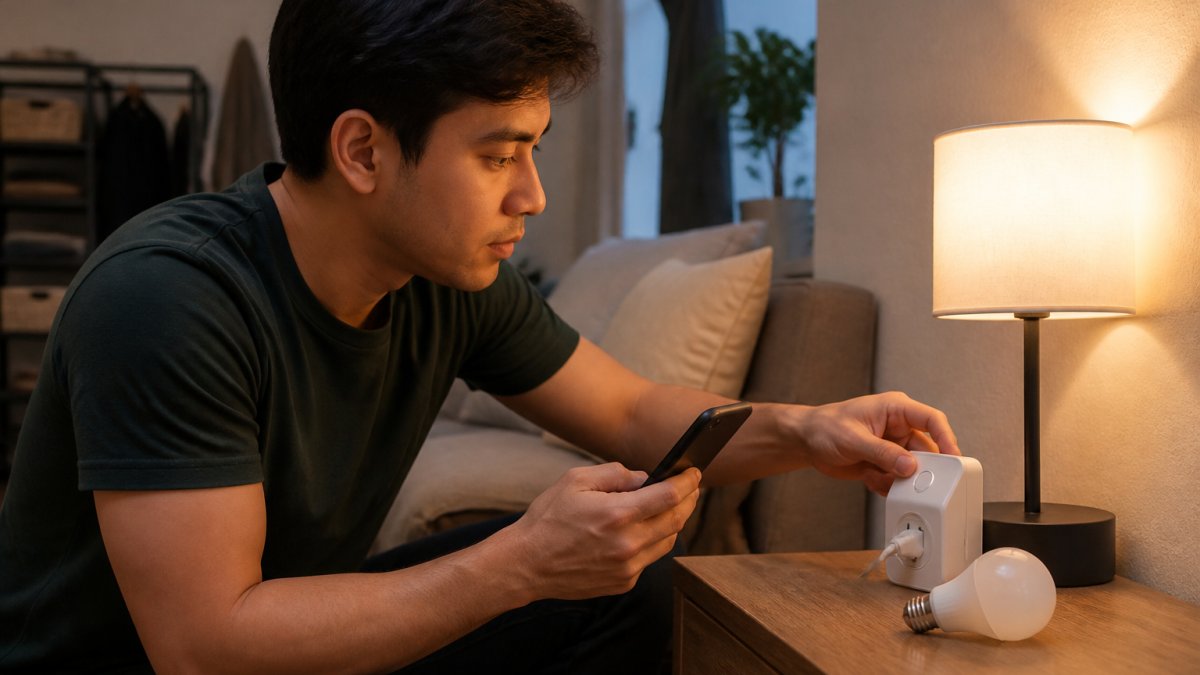
Smart plugs (entry tier). The cheapest way into home automation. They turn a dumb appliance into a scheduled one and work with almost anything that has a physical switch.
Smart LED bulbs (entry to mid tier). They cut lighting costs and let you set scenes without rewiring. Check three things before ordering: the fitting (bayonet vs screw), the brightness in lumens rather than wattage, and whether the bulb needs a hub or connects directly over Wi-Fi or Bluetooth.
Bluetooth trackers (entry tier). Attach to keys, bags, or a pet collar and ping your phone when misplaced. They are simple, they last, and they do not need a hub.
Budget video doorbells (upper-budget tier). A doorbell camera is the one smart-home device where the cheap option can genuinely disappoint. Entry-level models often skimp on night vision, motion zones, or local storage, and some push you toward a subscription for recordings.
What most guides miss is that these devices share a requirement: reliable Wi-Fi at the spot where they sit. If your router drops out in the back bedroom, your smart plug drops with it.
The Best Affordable Kitchen Gadgets for Daily Cooking
Kitchen gadgets justify themselves on frequency, not novelty. An electric milk frother, a digital meat thermometer, an immersion blender, and a compact air fryer earn counter space because you reach for them several times a week.
Digital meat thermometer (entry tier). The standout pick. It removes guesswork from cooking, which means less wasted food and fewer ruined dinners. Buy one with a folding probe and a clear display; the cheap fold-flat designs are genuinely good now.
Electric milk frother (entry tier). Small, cheap, and it does one job well. Skip the multi-attachment versions unless you will actually use them. A frother with a removable whisk is easier to clean and lasts longer.
Immersion blender (mid tier). More useful than a countertop blender for most small kitchens because it stores in a drawer and blends directly in the pan or jug. Look for a metal shaft rather than plastic, a detachable blending arm for cleaning, and at least two speed settings.
Compact air fryer (upper-budget tier). The one kitchen gadget where the cheap option can disappoint. A mid-tier model with a ceramic or well-coated basket and a simple dial rather than a touchscreen usually lasts longer and is easier to replace parts for.
Watch out: submersible kitchen electronics with poor seals fail early. Check that the waterproofing claim is specific, and never put a "water-resistant" device in a dishwasher.
Energy-Efficient Home Electronics That Cut Running Costs
Energy saving is where budget electronics quietly pay you back. LED lighting, smart plugs with scheduling, and devices with proper standby management all reduce the slow drip of wasted power. The trick is measuring the saving against the purchase, not assuming it.
Running costs come down to three habits:
- Replace the lights you leave on longest with LED equivalents first
- Put chargers and small appliances on a smart plug that cuts power overnight
- Choose devices with a real off switch rather than standby-only designs
A smart plug that kills standby power on a TV and console stack does more for your bill than any single gadget purchase. According to the Energy Saving Trust's guidance on standby power, standby consumption adds up across a household even when individual devices draw very little.
An Electronics Buying Guide for Home Use: What to Check First
Before you add anything to a basket, run this checklist. It takes two minutes and prevents most returns.
- Does it work with the phone and Wi-Fi you already have?
- Is the power supply standard, or does it need a proprietary adapter?
- Are the ports USB-C or older USB-A, and do you have the right cables?
- Is there a written warranty, and who honours it?
- Can you replace the battery, bulb, or filter yourself?
- Does the app require an account, and what data does it collect?
- Are spare parts or replacements available?
The cheapest device is the one you don't have to replace. Buy for the second and third year, not the first week.
Compatibility, Privacy and Security Checks
Compatibility is the number one source of quiet frustration. A device that needs a hub you don't own, or an app that only runs on one operating system, is a problem waiting to happen. Check the box for the wireless standard, usually Wi-Fi or Bluetooth, and confirm your router supports it.
Privacy matters more than most shoppers think. Connected devices often collect usage data, and cheap ones are less likely to explain what they do with it. Prefer brands with a published privacy policy and a local-only mode where possible. The UK Information Commissioner's Office guidance on smart devices sets out what you should expect from a connected product's data handling.
Security is the other half. Change default passwords on anything that connects to your network, and keep device firmware updated. A cheap camera or plug with an unchanged default login is a genuine risk, not a hypothetical one.
Warranty, Repairability and Long-Term Reliability
Long-term reliability separates a bargain from a false economy. Look for a stated warranty period, a support contact that isn't just a web form, and a design you can open without destroying it.
Repairability is the tell. If the battery is glued in or the bulb isn't replaceable, the device has a fixed lifespan by design. A slightly higher price for a replaceable part usually wins over three years.
Common Mistakes When Buying Cheap Home Electronics
A drawer full of failed gadgets costs more than one reliable purchase, and it clutters the house.
A device that needs a specific charger you don't own is not the price on the label; add the accessory cost before you decide.
If the complaints cluster around the same failure, that's the real product.
If a manufacturer won't tell you what data it collects, assume the worst and buy something else.
Stocking Your Home Tech in One Order
The practical path is to group your purchases by room and job, then buy once. One order covering lighting, kitchen, and charging saves repeat delivery costs and lets you check compatibility across the whole set before anything arrives.
At Theclothes.club, our home and living range sits alongside electronics, beauty, and pet supplies, so a single basket can cover the smart plug, the thermometer, and the household essentials you needed anyway. That's the convenience argument, and it's a real one for busy households. Olivia Martin put it simply: "The product quality exceeded my expectations, and the entire experience felt simple, secure, and professional."
We'd rather you bought two devices you keep than five you return.
Frequently Asked Questions
What are the most useful budget electronics to have at home?
The devices people reach for daily tend to be small and practical: smart plugs for lamps and chargers, LED bulbs for high-use rooms, a digital meat thermometer, an electric milk frother, a Bluetooth tracker for keys and bags, and a USB-C charging hub. Each one solves a repeated annoyance rather than adding another app to manage. Before buying, check the plug type, voltage and whether the device works without a subscription, since those three details decide whether a cheap gadget stays useful or ends up in a drawer.
How can I choose reliable budget electronics without overspending?
Start with the specification that decides the job, not the feature list. For a smart plug, that means load rating and app support; for a kitchen gadget, it means wattage and dishwasher-safe parts. Read recent customer reviews that mention failures after a few months, confirm the warranty length and where repairs or returns are handled, and check running costs using the wattage on the label. A slightly higher price with a clear warranty often costs less over two years than replacing a failed bargain.
Are cheap smart home devices a security risk?
Any connected device can be, so treat the basics as part of the purchase. Change the default password, keep the app and firmware updated, and put the device on your main Wi-Fi only if the brand has a clear privacy policy about what data it collects. Avoid gadgets that require account access you cannot delete, and be cautious with devices that ask for more permissions than their function needs. If a product's app has no privacy information listed, that is a reason to skip it.
Do energy-efficient home electronics really save money?
They can, but the saving depends on how long the device runs and what it replaces. Swapping frequently used halogen bulbs for LED equivalents cuts the wattage drawn for the same light, and smart plugs that switch off standby loads help with devices left on around the clock. The bigger wins come from heating, cooling and refrigeration, not small gadgets. Check the wattage on the label and estimate hours of daily use before assuming a device will pay for itself.
Your home tech shouldn't be a gamble. Theclothes.club curates electronics with a one-stop shopping experience, free membership for exclusive deals, and a selection built around everyday use rather than novelty. Get started with Theclothes.club and build a home setup that actually lasts.


