


Last Updated: October 30, 2026
Quick Summary
To buy affordable electronics online safely, set your total budget before you shop, verify the seller's identity and reviews, and pay by credit card so you have a dispute route. Check the return policy and warranty before checkout, and confirm the model number against the manufacturer's page.
- Add a 10-15% buffer to your budget for shipping, tax, and one needed accessory.
- A padlock and https prove encryption only, not that the seller is honest.
- Credit cards offer the strongest protection and chargeback rights; never pay by gift card or crypto.
- Ask for battery health as a percentage before buying any used phone or laptop.
- Certified or manufacturer-refurbished devices are the best refurbished option, often with a warranty.
Table of Contents
- How to Buy Affordable Electronics Online Safely: Start With a Budget
- How to Avoid Online Shopping Scams: A Seller Verification Checklist
- How to Spot Counterfeit Electronics Before You Pay
- Safe Payment Methods for Online Shopping
- Check the Online Shopping Return Policy and Warranty
- Refurbished Electronics: Grading, Battery Health, and Total Cost
- Shop Affordable Electronics at Theclothes.club
- Frequently Asked Questions
How to Buy Affordable Electronics Online Safely: Start With a Budget
Buying affordable electronics online safely starts with one decision made before you open a single tab: your total budget, not the sticker price.
A safe electronics purchase is one where you know the total cost, the seller's identity, and your refund route before money leaves your account.
Here is how to set that budget:
- Pick a ceiling, not a target. Decide the most you will spend, then shop below it.
- Add a 10-15% buffer for shipping, tax, and one accessory you will actually need.
- Write down the model number you want before you compare prices.
- Separate needs from wants. A case and charger are needs. The upgraded color is not.
That last point matters more than it sounds. A budget only works if it survives contact with a checkout page. Below, the full checklist covers verifying sellers, spotting fakes, paying safely, reading return policies, and judging refurbished stock.
How to Avoid Online Shopping Scams: A Seller Verification Checklist
Most online shopping scams fall apart under five minutes of checking. A legitimate website gives you a real business name, a physical address, working contact details, and clear terms. If any of those are missing or vague, walk away.
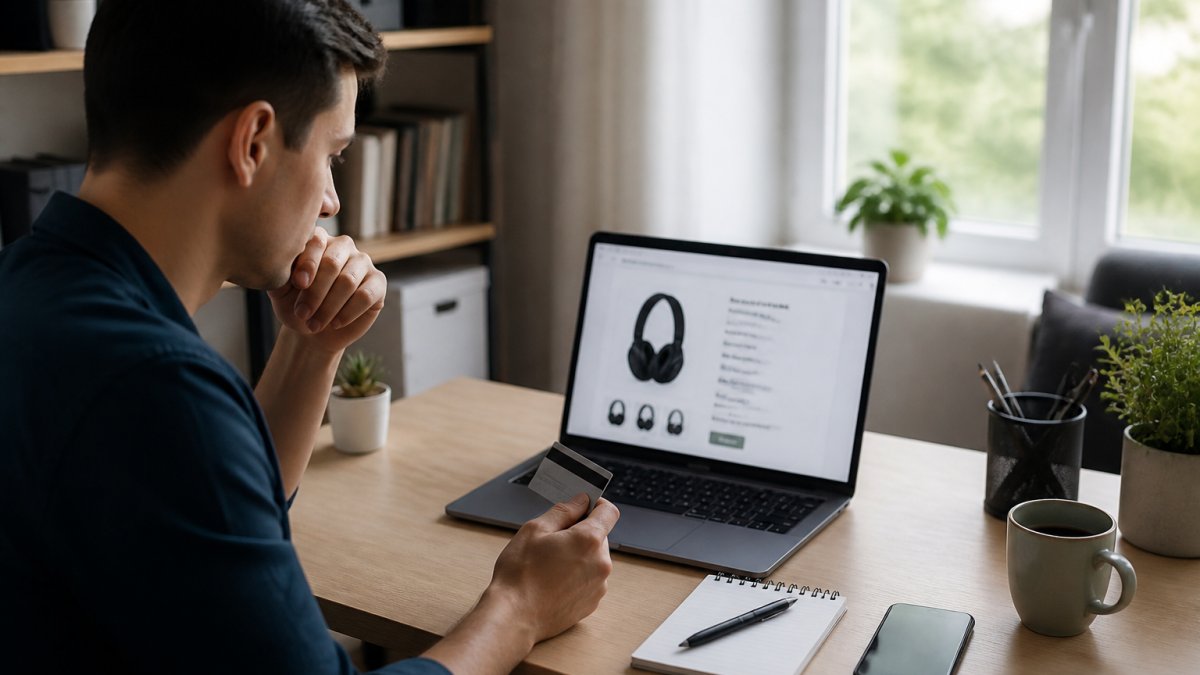
Run this checklist before you buy anything:
- Search the business name plus "reviews" and "scam" and read the bad results, not the good ones
- Find a physical address and phone number on the site, not just an email form
- Check that the "About" and "Contact" pages name a real company
- Look for a padlock and "https" in the address bar, though this alone proves nothing
- Read the return policy before checkout, not after
- Confirm the seller lists a company registration or trading name
- Be wary of a site that only accepts bank transfer or gift cards
A common mistake is trusting a padlock as proof of honesty. It only means the connection is encrypted, not that the seller is real.
Verify the domain and contact details
A padlock is not a background check. Look at the domain itself: a site that mimics a known brand with a slight misspelling (for example, a doubled letter or a different top-level domain) is a classic phishing pattern. Check how long the domain has existed using a free WHOIS lookup; a domain registered weeks ago selling flagship electronics is a warning sign. Legitimate retailers usually list a customer-service phone number and a physical address you can cross-check on a map. Call the number before you pay if the order is large.
Check seller history and independent reviews
On marketplaces, open the seller's profile and look at how long they have been active, their feedback score, and the age of their reviews. A brand-new account with a handful of five-star reviews posted in the same week is a common pattern for fake sellers. Do not rely only on reviews hosted on the seller's own site. Search the business name on independent review platforms and forums, and read the one- and two-star reviews first. Look for complaints about items never arriving, wrong models shipped, or returns refused.
Cross-check the product listing against the manufacturer
Before paying, confirm the model number on the manufacturer's own product page and check whether the seller is listed as an authorized retailer. Counterfeiters often use real product photos but ship a different model. If the listing's specifications, warranty terms, or included accessories differ from the manufacturer's page, ask the seller to explain in writing.
For a deeper look at the tactics scammers use, read our guide on how to avoid dropshipping scams. And because reviews are easy to fake, our breakdown of how to spot fake online reviews shows what genuine feedback looks like.
How to Spot Counterfeit Electronics Before You Pay
Counterfeit electronics usually announce themselves through the price and the packaging. If a current-model device sits far below every other seller, treat that as a warning, not a win. Genuine stock has a floor, and fakes cannot beat it honestly.
Check these before you pay:
- Model number and specs. Compare the listing's model number against the maker's own product page.
- Seller history. A brand-new account selling flagship devices is a red flag.
- Photos. Stock images with no real product shots often hide a fake.
- Warranty terms. Real goods carry a manufacturer warranty. Fakes rarely do.
- Serial number. Ask the seller to confirm it can be checked with the manufacturer.
Fake discounts are a favorite lure. Our guide on how to spot fake online discounts explains how inflated "was" prices work, so you can judge whether a deal is real.
Watch out: if a seller refuses to confirm a serial number or warranty before purchase, that refusal is your answer.
Safe Payment Methods for Online Shopping
Safe payment methods for online shopping are the ones that give you a dispute route. Credit cards and established payment services let you challenge a charge when goods never arrive or arrive wrong. Bank transfer and gift cards give you almost no comeback.
Rank payment options like this:
- Credit card. Strongest protection and chargeback rights.
- Reputable payment service. Buyer protection on eligible purchases.
- Debit card. Some protection, weaker than credit.
- Bank transfer. Avoid for unfamiliar sellers.
- Gift cards or crypto. Never, for online shopping.
Use one card for online purchases so disputes are easy to track. Keep your personal information minimal, and never send card details by email or message.
What to do when a purchase goes wrong
If an item never arrives, arrives damaged, is counterfeit, or differs from the listing, act quickly and in writing. First, contact the seller through the platform's messaging system so there is a record, and state clearly what is wrong and what remedy you want (replacement, refund, or return). Give a reasonable deadline, such as seven days. If the seller does not resolve it, escalate to the payment provider. Credit-card chargebacks have a time limit, so do not wait. For payment services, open a buyer-protection dispute through the service's resolution center.
Protect your accounts and privacy
Use guest checkout where it is offered, so the retailer stores less of your data. If you must create an account, use a unique password you do not use elsewhere, and turn on multifactor authentication if the site supports it. Avoid entering payment details on public Wi-Fi; use a mobile connection or a trusted network.
The UK National Cyber Security Centre shopping safely guidance is a solid plain-language reference on protecting your accounts and payments.
Rank payment options by the protection and dispute route they give you.
| Payment method | Protection level | Note |
|---|---|---|
| Credit card | Strongest protection | Chargeback rights |
| Reputable payment service | Buyer protection | On eligible purchases |
| Debit card | Some protection | Weaker than credit |
| Bank transfer | Avoid | For unfamiliar sellers |
| Gift cards or crypto | Never | For online shopping |
Check the Online Shopping Return Policy and Warranty
An online shopping return policy and warranty decide how much risk you actually carry. Read both before checkout. A generous return window with a clear refund process is worth more than a small saving.
Look for:
- Return window. How many days do you have, and does it start at order or delivery?
- Who pays return shipping. A "free returns" label means little if you cover postage.
- Refund versus credit. You want your money back, not store credit.
- Warranty length and who honors it. Manufacturer warranty beats a seller's own promise.
- Exclusions. Opened software, hygiene items, and used goods often fall outside cover.
If the policy is buried or vague, assume the worst. A seller who hides the return terms will likely make a return hard.
Refurbished Electronics: Grading, Battery Health, and Total Cost
Refurbished electronics can be the smartest way to buy affordable electronics, provided you understand the grading and the battery. "Refurbished" is not one thing. Grades vary by seller, and battery health is the spec most listings bury.
A simple grading guide:
- Certified or manufacturer-refurbished. Inspected, often with a warranty. Best option.
- Grade A. Light wear, fully working.
- Grade B. Visible marks, still functional.
- Grade C. Heavy wear, cheapest, highest risk.
Ask for battery health as a percentage before buying any used phone or laptop. A cheap device with a worn battery is not cheap once you replace it.
Then think total cost of ownership: purchase price plus a new battery, a case, a charger, and any missing accessories. That sum is the real price. Compare it against new before you decide.
Shop Affordable Electronics at Theclothes.club
Theclothes.club brings electronics together with fashion, beauty, home, and pet supplies, so you can cover several needs in one order and one checkout.
What we offer:
- A curated selection across electronics and everyday essentials
- Great value on many items
- A free membership for exclusive deals and events
- A convenient, one-stop experience instead of juggling multiple retailers
Customers have shared their experience. Olivia Martin said her "product quality exceeded my expectations," and the experience felt "simple, secure, and professional." Sophia Williams noted everything "arrived exactly as expected."
Ready to shop with confidence? Browse affordable electronics at Theclothes.club and put the checklist above to work.
Frequently Asked Questions
How can I tell if an online electronics seller is legitimate?
Check the seller's full contact details, a registered business address, and a clear returns page before you buy. Look for HTTPS and a secure checkout on every page, and read recent seller reviews on independent sites. A legitimate website will list a company number or VAT number and answer pre-sale questions promptly. If the site hides its address, has no returns policy, or only offers bank transfer, treat it as a red flag and shop elsewhere.
What should I check before buying affordable electronics online?
Confirm the exact model number and compatibility, then compare the price against two or three other retailers to see if the deal is realistic. Read the return policy and warranty terms, including who pays return shipping. Use a credit card or a protected payment method, and keep the order confirmation and product page screenshots. Finally, check whether the seller is the manufacturer, an authorised retailer, or a marketplace third party, because that changes who handles faults and refunds.
How do I know if an electronics deal is too good to be true?
A discount of 50% or more on a current-model device from an unknown seller is a warning sign, especially if the listing uses stock photos and vague specifications. Check price-history tools to see whether the original price was inflated before the sale. Search the exact model number plus the word scam, and read the seller's recent reviews for delivery or authenticity complaints. If the price is far below every major retailer and the seller pressures you with a countdown timer, walk away.
What payment method is safest for online electronics purchases?
Credit cards offer the strongest protection because you can raise a chargeback if goods never arrive or are not as described. Debit cards and PayPal also provide dispute routes, but bank transfer and cryptocurrency usually offer no refund path. Never send payment details by email or pay outside the retailer's checkout. Keep receipts and screenshots, and if a purchase goes wrong, contact the seller first, then your card issuer or payment provider with the evidence.
Buying affordable electronics online safely comes down to a few habits: set the budget first, verify the seller, pay with protection, and read the return policy. It takes minutes and saves real money. At Theclothes.club, we make that easier with a curated range, great value, and a free membership for exclusive deals. Get started with Theclothes.club and shop smarter today.


