


Table of Contents
- Start With Your Pet's Species, Age, Size, and Health Needs
- How to Choose Safe Pet Products: Materials, Construction, and Design
- Reading Labels and Ingredient Lists on Pet Food and Treats
- Pet Product Safety Standards, Recalls, and Independent Checks
- How to Evaluate Pet Product Reviews Without Getting Fooled
- Best Online Shops for Pet Supplies: What to Look For
- Comparing Quality Pet Products on Price, Durability, and Total Cost
- A Quick Checklist for Finding Quality Pet Products
- Frequently Asked Questions
Last Updated: October 17, 2026
Start With Your Pet's Species, Age, Size, and Health Needs
Finding quality pet products starts with your pet, not the product. A toy built for a power-chewing Labrador can injure a Chihuahua, and a food made for a growing puppy can upset a senior cat's digestion.
Before you browse anything, write down four facts:
- Species: dog, cat, rabbit, bird, or reptile. Needs differ sharply.
- Age: puppy or kitten, adult, or senior. Joint and dental needs shift with age.
- Size: weight and build. A 3kg terrier and a 40kg retriever need different gear.
- Health: allergies, sensitive stomach, arthritis, or a vet-diagnosed condition.
That last one matters most. If your pet has a health issue, ask your vet before changing food, treats, or supplements.
Life stage changes everything. Puppies chew. Seniors sleep more and need softer bedding. Cats groom constantly, so they swallow more hair and need help passing it. Match the product to the stage, not the label's marketing.
How to Choose Safe Pet Products: Materials, Construction, and Design
Safe pet products share three traits: pet-safe materials, solid construction, and a design that suits how your animal actually plays or eats. Check these before price or looks.
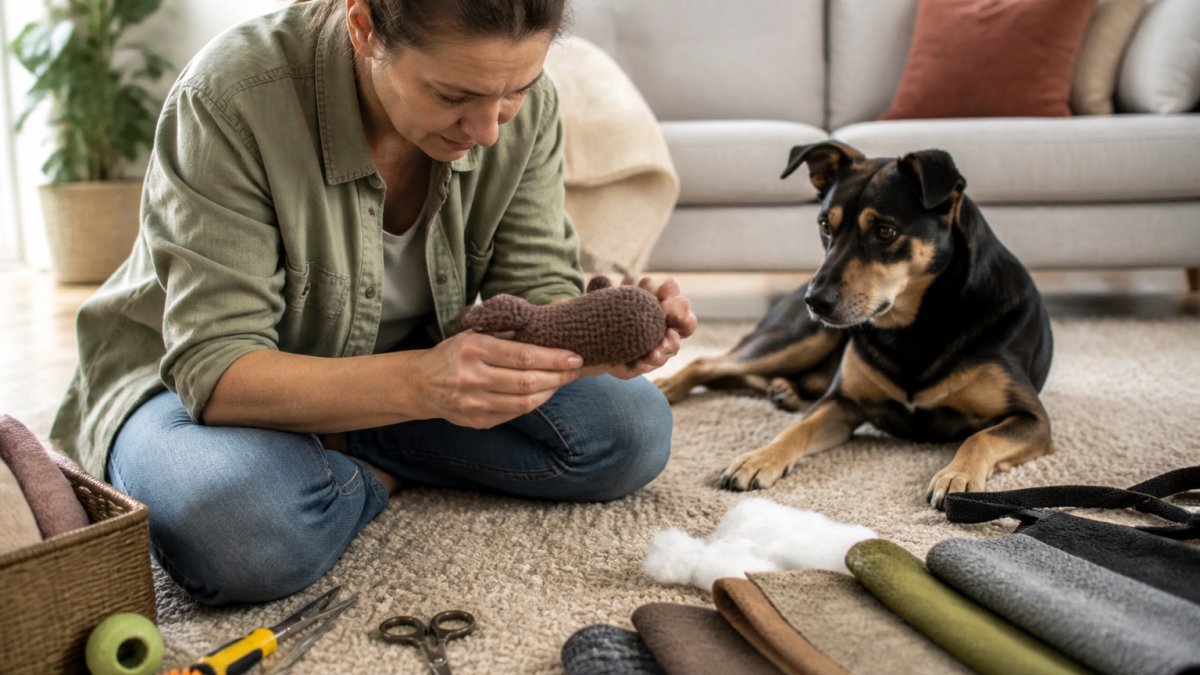
Here is what we look at first:
- Materials: food-grade stainless steel, BPA-free plastic, untreated natural rubber, and washable fabrics. Avoid strong chemical smells, which often signal cheap coatings.
- Construction: stitched seams that don't pull apart, no loose squeakers, no small parts a pet can swallow.
- Design: rounded edges, no sharp wire ends, sizes matched to your pet's mouth and paws.
A common mistake is buying a toy that's too small. Dogs and cats can choke on pieces that fit inside their throat.
For chews, match hardness to your pet's teeth. Hard nylon can crack a senior dog's teeth. Soft chews vanish in minutes for heavy chewers. The right pick sits between those extremes for your animal.
Reading Labels and Ingredient Lists on Pet Food and Treats
Pet food labels reward careful reading. Ingredients are listed by weight, so the first few names tell you the most. If "meat" appears first but is followed by several grains and fillers, the food is mostly filler.
What to look for on the label:
- Named protein first: "chicken" or "salmon," not vague "meat" or "animal derivatives."
- Clear wording: "complete" food meets daily needs; "complementary" food does not.
- Guaranteed analysis: protein, fat, fibre, and moisture figures you can compare across brands.
- Feeding guide: a weight-based chart, not vague scoops.
Treats deserve the same scrutiny. Many are high in sugar, salt, or artificial colourings. Look for short ingredient lists and single-protein treats if your pet has allergies.
For guidance on what a complete diet looks like, check the PFMA's pet food labelling guidance, which explains how UK labels must be written. It's a plain-language starting point before you compare products.
Pet Product Safety Standards, Recalls, and Independent Checks
Pet product safety is not governed by one rulebook. Food and feed, toys, electrical items, grooming products, and supplements each fall under different rules, and enforcement varies by country.
Start by knowing which category you are buying, because the checks differ:
- Food, treats, and supplements: look for a named manufacturer, a batch or lot code, a best-before date, and a "complete" or "complementary" statement. In the UK, feed law requires this information, and the Food Standards Agency publishes product recall notices you can search by brand or product name.
- Toys and chews: check for a manufacturer name and address, material description, and any choking or supervision warning. There is no single mandatory toy standard in every market, so the presence of clear warnings is itself a quality signal.
- Electrical items such as heated beds, water fountains, and clippers: look for a recognised safety mark and a UK plug with a fused rating. The Office for Product Safety and Standards lists recalls and safety alerts for general consumer products.
- Grooming and hygiene products: check for an ingredients list, a batch code, and clear directions. Products with no ingredient list are a red flag, especially for pets with skin conditions.
A practical recall check takes about two minutes:
- Search the exact product name plus "recall" and your country.
- Check the manufacturer's own website for a recall or safety notice page.
- Search your country's regulator site by brand name, not just product name.
- If you already own the product, stop using it and follow the recall instructions, most recalls offer a refund or replacement.
Batch codes matter more than most shoppers realise. A recall often applies to one production run, not the whole brand. If a food or treat has no batch code, you cannot tell whether your bag is affected, and a reputable manufacturer should always print one.
How to Evaluate Pet Product Reviews Without Getting Fooled
Pet product reviews are useful, but only when you read them the right way. The trick is to look for patterns, not stars, and to know which patterns signal a real problem versus a noisy one.
How to judge a review page:
- Read the 3-star reviews first. They tend to be balanced and specific, naming both what worked and what did not.
- Check for detail. Real reviews mention the pet's size and weight, how long the product lasted, and what broke first.
- Watch for bursts. A flood of five-star reviews in one week often signals a promotional push, not a lasting trend.
- Look for buyer photos. Real photos show the product as it arrived, not the studio shot.
- Sort by "most recent." A product that was good two years ago may have changed manufacturer or materials since.
What most guides miss is how to spot reviews that were incentivised or are simply unrepresentative:
- Incentivised reviews often carry a disclosure such as "received free" or "in exchange for a review," or they cluster around a launch date. They are not automatically fake, but they tend to be kinder than long-term buyers would be.
- Suspicious reviews are short, generic, and posted in batches, "great product, love it" with no detail about the pet, the size, or the use. Treat a wall of these as noise.
- Unrepresentative reviews come from a single household with an unusual pet or use case. One complaint about a chew toy splitting is not a pattern; twenty reviews mentioning the same seam failure is.
Weigh recurring feedback against isolated complaints.
Review scores also reward cheap products. A low-cost toy with hundreds of reviews can outrank a durable one with forty, because more people buy cheap items and bother to review them.
Best Online Shops for Pet Supplies: What to Look For
The best online shops for pet supplies share a few clear signals: full product details, real customer photos, a visible returns policy, and fast, tracked delivery. If a shop hides any of these, shop elsewhere.
Our shortlist of what to check before you buy:
- Product pages list materials, sizes, and care instructions.
- Reviews include buyer photos and dates.
- Returns policy is easy to find and simple to use.
- Delivery gives a tracked option and a clear timeframe.
- Contact details are real, with a way to reach a person.
Our pet supplies sit alongside fashion, home, and beauty, so busy parents can pick up daily essentials in one order. Every product is chosen for value, and our free membership unlocks deals and new arrivals. As customer Olivia Martin puts it, "The product quality exceeded my expectations, and the entire experience felt simple, secure, and professional."
Comparing Quality Pet Products on Price, Durability, and Total Cost
Cheap pet products often cost more over time. A flimsy bed that flattens in a month, or a toy that splits in a week, means buying again. Compare total cost, not sticker price.
Use this quick comparison to think it through:
| What to Compare | Cheap Option | Quality Option | What It Means for You |
|---|---|---|---|
| Upfront price | Lower | Higher | Quality costs more at checkout |
| Lifespan | Weeks to months | Months to years | Fewer repeat buys |
| Replacement rate | Frequent | Rare | Less hassle and waste |
| Safety | Higher risk of splits | Tested materials | Fewer vet visits |
| Total cost | Often higher | Often lower | Value shows over time |
Durability is the clearest signal. A well-made harness, crate, or food bowl should last years with normal use. Read the care instructions, because washing a product the wrong way can shorten its life.
Price still matters. A higher price doesn't guarantee quality, so judge by materials, construction, and reviews, then weigh the price against how long the product will last.
A Quick Checklist for Finding Quality Pet Products
Here is a checklist you can run through in two minutes before any purchase:
- Matches your pet's species, age, size, and health needs
- Materials are pet-safe and listed clearly
- Construction is solid, with no loose or small parts
- Food labels name a protein first and show a guaranteed analysis
- No active recall on the product or brand
- Reviews are recent, detailed, and include buyer photos
- Shop shows a clear returns policy and tracked delivery
- Price makes sense against expected lifespan
Run this list and you'll avoid most bad buys. It won't make every product perfect, but it filters out the weak ones fast.
Our goal is simple: quality products at fair value, with a shopping experience that feels easy from start to finish. As customer Michael Anderson says, "The quality is excellent, the products are stylish, and the service was reliable."
Frequently Asked Questions
How do I know if a pet product is good quality?
Check three things: materials and construction, suitability for your pet's species, age, size, and health needs, and whether the seller provides clear product details. Look for reinforced seams on toys, food-grade materials on bowls, and an ingredient list you can actually read on food and treats. Reviews help, but read the middle-rated ones first because they tend to describe real problems. A product that matches your pet's size and chewing style will always outperform a generic bestseller.
What should I check before buying pet supplies online?
Before you buy, confirm the seller's return policy, delivery timeframes, and whether product descriptions include full ingredient lists or material specs. Read recent customer reviews and look for photos from buyers rather than only studio shots. If a listing hides the manufacturer or gives vague sizing, treat that as a warning sign and look elsewhere.
How can I tell whether pet product reviews are trustworthy?
Look for reviews that mention specific details like sizing, durability over weeks or months, and how a pet actually reacted. Short five-star reviews posted in bulk on the same day are a weak signal. Sort by lowest rating to see recurring complaints, then check whether the seller responds. Reviews with buyer photos are more reliable than text-only ones. Cross-check claims against the product description; if reviews contradict the listing, believe the reviews.
Where can I find reliable online stores for pet supplies?
Reliable stores show clear product specifications, publish a returns policy, and stock a curated range rather than thousands of near-identical listings. Check whether the shop groups pet supplies by species and life stage, which makes suitability easier to judge. Look for visible customer service contact details, and reviews that reference delivery and after-sales support. A store that explains what it stocks and why is usually safer than one that lists everything.
Finding quality pet products takes a little effort, but the payoff is a healthier, happier pet and fewer wasted purchases. Theclothes.club makes that easier with a curated range of pet supplies, home essentials, and lifestyle finds in one place. Browse our pet supplies, use your free membership for exclusive deals, and shop with confidence. Get started with Theclothes.club and find quality products you and your pet will love.


