


Table of Contents
- Why You Need a System to Verify Clothing Quality Online
- How to Identify Quality Fabric Online
- How to Check Clothing Stitching and Construction
- How to Verify Clothing Authenticity Online
- Reading Product Photos and Specifications Like a Pro
- Online Clothing Return Policy Checklist
- Quality Indicators by Garment Category
- Conclusion: Shop with Confidence
- Frequently Asked Questions
Last Updated: October 18, 2026
Why You Need a System to Verify Clothing Quality Online
Learning how to verify clothing quality online starts with one simple truth: photos can flatter almost anything. That is why a repeatable system beats gut feeling every time.
Clothing quality is the combined result of fabric, stitching, construction, and finishing. You can judge all four from a listing if you know where to look.
A common mistake is judging by the model photo alone. Instead, work through a fixed checklist every time:
- Zoom into seams, hems, and buttons
- Read the material breakdown, not just the title
- Compare the label to known brand marks
- Check the seller's returns policy before you buy
That order matters. It moves you from "looks nice" to "holds up." The rest of this guide walks through each step, from fabric to authenticity to returns, so you can shop with confidence.
How to Identify Quality Fabric Online
Start with the material line in the product details, because fabric decides how a garment feels, drapes, and lasts. Natural fibers like cotton, linen, and wool usually breathe better and soften with wear. Synthetic blends can be durable and stretchy, but cheap versions often pill or trap heat.
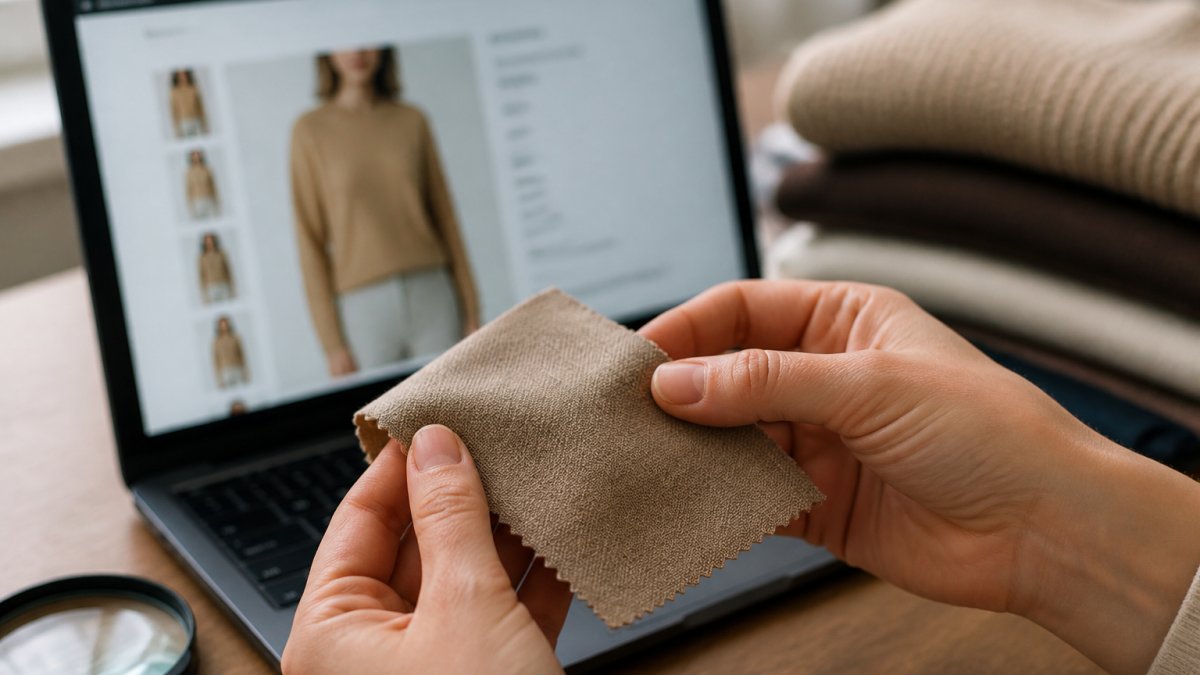
Read the percentages, not just the names
A "cotton blend" that is mostly polyester behaves very differently from one that is mostly cotton. The order of fibers on the label reflects their proportion, so read the percentages before anything else. As a rule of thumb:
- Cotton-rich (80%+): breathable, softens with washing, good for everyday shirts and tees. Look for combed or ring-spun cotton for smoother, stronger yarn.
- Wool-rich: warm, odor-resistant, and durable if the wool is fine. Lambswool and merino are softer; coarser wools pill less but feel rougher.
- Linen: strong and breathable but wrinkles easily. Blends with cotton or viscose reduce creasing.
- Polyester-heavy blends: durable and wrinkle-resistant but can trap heat and pill if the yarn is cheap. A small percentage of elastane (2-5%) adds stretch without ruining breathability.
- Viscose and rayon: drape well but lose strength when wet. Check care instructions carefully.
Check fabric weight and weave
Weight or GSM (grams per square metre) tells you how substantial the fabric is. Where a listing gives it, use it to compare like for like:
- Lightweight tees: roughly 120-150 GSM
- Midweight tees and shirts: roughly 150-200 GSM
- Heavyweight tees and sweatshirts: roughly 200-300 GSM and above
- Denim: usually 10-14 oz, with heavier weights more durable
These ranges are approximate and vary by garment, but they give you a baseline. A tee listed at 120 GSM will feel thin; one at 220 GSM will feel substantial.
Weave and knit type matter too. Twill (denim, chinos) is dense and durable. Poplin (shirts) is smooth and crisp. Jersey (tees) is soft and stretchy. Rib knit (cuffs, necklines) should look tight and springy, not loose and limp.
Match care instructions to the fiber
Care instructions should be consistent with the material. Wool that says machine wash hot, or silk that says tumble dry, is a warning sign. A seller who lists accurate, fiber-appropriate care is usually more careful about the product overall.
The UK government guidance on textile fiber labelling requires sellers to state fiber composition, so a listing that hides it is a warning sign. If the fabric content is vague or missing, treat that as a reason to keep looking.
How to Check Clothing Stitching and Construction
Stitching tells you more about construction than any marketing photo. Even, tight, straight seams signal care. Loose, wavy, or skipped stitches signal a garment that will fray or split.
Zoom in on the product photos and check these points:
- Seam density: more stitches per inch usually means stronger seams
- Reinforcement: double stitching at stress points like armholes and crotch
- Hems: clean, folded, and evenly stitched, not raw or glued
- Buttons and zips: securely attached, with neat buttonholes
- Lining and finishing: no loose threads or unfinished edges inside
A practical quality checklist for ordinary clothing works here too. You do not need luxury labels to demand straight seams and secure buttons. If a seller only shows styled full-body shots and never a close-up, ask for one. A confident seller will send it.
How to Verify Clothing Authenticity Online
Authenticity checks matter most for branded and luxury items, but the same habits protect you on everyday buys. Genuine products carry consistent logos, clean labels, and matching brand marks. Counterfeits usually slip on the details.
Work through these markers:
- Logo accuracy: spacing, font, and alignment should match the brand's official images
- Labels and tags: woven labels, care labels, and holographic tags should look crisp, not printed and peeling
- Stitching on logos: embroidery should be dense and even, not loose or crooked
- Serial or style codes: many brands print these inside the garment; check they exist and match
- Price sanity: a steep discount on a premium brand deserves scrutiny
For high-value pieces, third-party authentication or expert verification adds real confidence. For everyday apparel, comparing product details with known authentic examples is usually enough. The UK consumer protection guidance from the Chartered Trading Standards Institute sets out your rights when goods are not as described, which is your safety net if a fake slips through.
Reading Product Photos and Specifications Like a Pro
Product photos and specifications are where careful buyers separate themselves from impulse buyers. The trick is to read them the way a buyer, not a browser, would. Most listings give you enough visual evidence to judge construction before you pay, if you know which details to zoom into.
What to look for in product photos
Start with the specification table. Material, measurements, and care details should be specific and consistent. Then study the photos for what is missing:
- Multiple angles: front, back, inside, and close-ups
- True-to-life color: consistent lighting across shots
- Fit on real bodies: not just one styled pose
- Size charts: actual measurements, not just S/M/L
Assessing fabric and construction from photos takes practice. Work through these visual cues in order:
1. Fabric weave and texture. Zoom in on a flat, well-lit shot. A visible, tight weave (twill, poplin, dense jersey) usually signals better durability than a loose, fuzzy surface. If the fabric looks thin enough to see light through it in a normal product shot, assume it is lightweight and check the GSM or material weight before buying.
2. Seams and stitching. Look for a close-up of a side seam or hem. Even, straight stitching with no puckering is a good sign. Wavy seams, visible loose threads, or single-stitched stress points (armholes, crotch, pocket corners) are red flags.
3. Hems and finishing. A clean, folded, double-stitched hem holds up. Raw, glued, or unevenly cut hems are a sign of cost-cutting.
4. Buttons, zips, and hardware. Buttons should sit flat and be securely attached. Zips should look substantial, with neat stitching around the tape. Cheap plastic zips on outerwear are a common failure point.
5. Lining and inner construction. A listing that shows the inside of a garment is usually a good sign. Look for a full lining in tailored pieces, clean seam binding, and no loose threads or unfinished edges.
How to read the specification table
Specifications are where sellers reveal, or hide, the details that matter. Read them in this order:
- Fiber composition: percentages, not just names. A "cotton blend" that is mostly polyester behaves very differently from one that is mostly cotton.
- Fabric weight or GSM: where given, this tells you how substantial the fabric is. Heavier generally means more durable, but match it to the garment type.
- Measurements: actual garment measurements (chest, length, sleeve) are more useful than S/M/L. Compare them to a garment you already own.
- Care instructions: these should match the fiber. Wool that says machine wash hot, or silk that says tumble dry, is a warning sign.
A listing that hides fiber content, shows only styled full-body shots, and gives no measurements is telling you something. Treat missing detail as a reason to keep looking, not a reason to guess.
Online Clothing Return Policy Checklist
A clear returns policy is your real protection, so read it before you pay, not after. Use this checklist:
- Return window length (how many days you have)
- Who pays return postage
- Condition rules (tags on, unworn)
- Refund versus store credit
- Process for faulty or "not as described" items
- Contact details for support
Under UK online shopping distance selling rules, you generally have a right to cancel and return most online orders within a set period. Confirm the seller's own terms match that baseline. A seller who hides the policy, or makes returns deliberately hard, is telling you something about how they handle problems.
Quality Indicators by Garment Category
Different garments fail in different ways, so adjust your checks by category. Here is how to focus your inspection:
| Garment | Key quality checks | Red flags |
|---|---|---|
| T-shirts | Fabric weight, neckline stitching | Thin, see-through fabric |
| Jeans | Seam strength, rivets, zip quality | Single-stitched stress points |
| Dresses | Lining, hem finish, zip | Raw hems, no lining |
| Knitwear | Yarn density, shape retention | Loose knit, pilling |
| Outerwear | Zips, seams, lining | Weak zips, thin shell fabric |
This table is your quick reference. Match the category to the checks, and you will spot weak items fast. The same logic applies to novelty and statement pieces: bold prints still need solid seams.
Conclusion: Shop with Confidence
Verifying clothing quality online comes down to a repeatable system: fabric, stitching, authenticity, photos, and returns. Run those checks and you will stop guessing and start buying with confidence.
That is exactly how we approach our curated range at Theclothes.club. Our free membership unlocks exclusive deals and new arrivals, and our focus on quality products means fewer surprises when the parcel arrives. As customer Olivia Martin puts it, "The product quality exceeded my expectations, and the entire experience felt simple, secure, and professional."
Ready to shop smarter? Get started with Theclothes.club and discover items you will love, with the confidence that comes from knowing what to check.
Frequently Asked Questions
How can I check the quality of clothing before buying online?
Start by zooming into product photos to examine fabric texture, stitching, and seams. Read the material composition and care instructions carefully. Look for clear, high-resolution images that show close-ups of construction details. Check customer reviews for comments on fabric feel and durability. Verify the seller's return policy so you can inspect the item in person and send it back if it does not meet your expectations. A structured approach helps you assess clothing quality without touching the garment first.
What details should I look for in clothing product photos?
High-quality listings include close-ups of seams, hems, buttons, zippers, and labels. Look for even stitching with no loose threads, matched patterns at seams, and clean finishing inside the garment. Photos should show the item on a model or mannequin from multiple angles, plus flat lays. Avoid listings with only one blurry image or heavily filtered photos that hide texture. If the seller provides detailed shots of construction, that is a strong signal they stand behind their clothing quality.
How can I tell whether an online clothing seller is trustworthy?
Check for a clear return policy, physical business address, and responsive customer service. Read independent reviews and look for patterns in feedback about sizing, fabric, and delivery. A legitimate retailer will provide detailed product specifications and real photos. Look for secure checkout (https) and transparent contact information. Trust your instincts: if the deal seems too good, it often is.
What should I check in a clothing store's return policy?
Confirm the return window (typically 14-30 days), who pays return shipping, and whether refunds or only store credit are offered. Check if items must be unworn with tags attached. Look for exclusions like final sale or intimate apparel. A good policy is easy to find on the website and written in plain language. Before ordering, screenshot the policy in case it changes. A hassle-free return process gives you confidence to verify clothing quality in person and return if needed.


