


Table of Contents
- Why Shoppers Are Looking for Shein Alternatives
- Quick Comparison: Shein Alternatives at a Glance
- Affordable Clothing Brands With Good Quality
- Sustainable and Ethical Alternatives to Shein
- How to Check Clothing Quality When Shopping Online
- Sizing, Fit and Size Inclusivity Compared
- Shipping, Returns and Customer Service: What to Expect
- Which Alternative Should You Pick?
- Frequently Asked Questions
Last Updated: October 19, 2026
Why Shoppers Are Looking for Shein Alternatives
The hunt for the best alternatives to Shein for quality starts with a simple frustration: clothes that look good in the listing photo and fall apart after two washes. At Theclothes.club, we understand the desire for trend-led pieces without the gamble on fabric, fit and finish.
Below, we'll show you which brands hold up, how to judge garment construction before you buy, and how to calculate real value instead of chasing discounts.
Quick Comparison: Shein Alternatives at a Glance
Here is the short version for shoppers who want a decision fast.
| Brand or Route | Quality Focus | Price Position | Best For |
|---|---|---|---|
| Theclothes.club | Curated selection across fashion and lifestyle | Competitive, value-led | One-stop shopping for clothing and home essentials |
| Uniqlo | Durable everyday basics | Accessible | Wardrobe staples that last |
| ASOS | Broad range, more consistent quality | Mid-range | Trend-led styles with wider choice |
| Happy Earth | Certified organic pieces | Higher than fast fashion | Sustainable everyday wear |
| Vinted and Depop | Pre-owned, varies by listing | Low to mid | Unique pieces and lower environmental impact |
Affordable Clothing Brands With Good Quality
Quality at a low price is not a contradiction, but it requires knowing where to look.
Uniqlo: Everyday Basics That Last
Uniqlo is the safest starting point for replacing fast-fashion basics. It focuses on wardrobe staples rather than trend pieces, and its everyday items are widely described as lasting for years. If your Shein order was mostly plain tees, knitwear and trousers, Uniqlo covers that ground with better fabric and cleaner construction.
ASOS: Broad Range, More Consistent Quality
ASOS wins on range, stocking thousands of styles across its own labels and third-party brands so you can compare fabric details and reviews side by side. Check fabric composition and read fit reviews, because quality varies between in-house lines and branded items.
Theclothes.club: Curated Fashion and Lifestyle in One Place
Our own approach at Theclothes.club is curation over volume. We stock fashion alongside electronics, beauty, home and living, and pet supplies, so a single order can cover a night-out outfit and household essentials. Every product is selected for quality and value, and a free membership unlocks exclusive deals and new arrivals.
Sustainable and Ethical Alternatives to Shein
For shoppers who care about labor practices and environmental impact, the sustainable and ethical alternatives to Shein fall into two camps: certified new clothing and pre-owned fashion.
Happy Earth: Certified Organic Everyday Pieces
Happy Earth builds its range around everyday clothing made from organic materials, with certifications as a core part of the offer, a verifiable claim rather than vague green marketing. The pieces suit casual wear rather than occasionwear, and the price sits above fast fashion.
Vinted, Depop and Consignment: Pre-Owned Quality for Less
Second-hand marketplaces are the most underrated route to quality clothing on a budget. Vinted and Depop let you search by brand, size and condition, which means you can find well-made garments from established labels at a fraction of their original price. Thrift and consignment stores work on the same principle: the cited styling guidance from Melissa de Leon's budget shopping guide notes that thrift and consignment shopping can uncover quality-made clothing for less.
How to Check Clothing Quality When Shopping Online
Most guides tell you to "check the fabric and stitching" and stop there, useless advice when you are staring at a product page with three photos and a composition line.
Fabric Composition: Read the Percentages, Not the Buzzwords
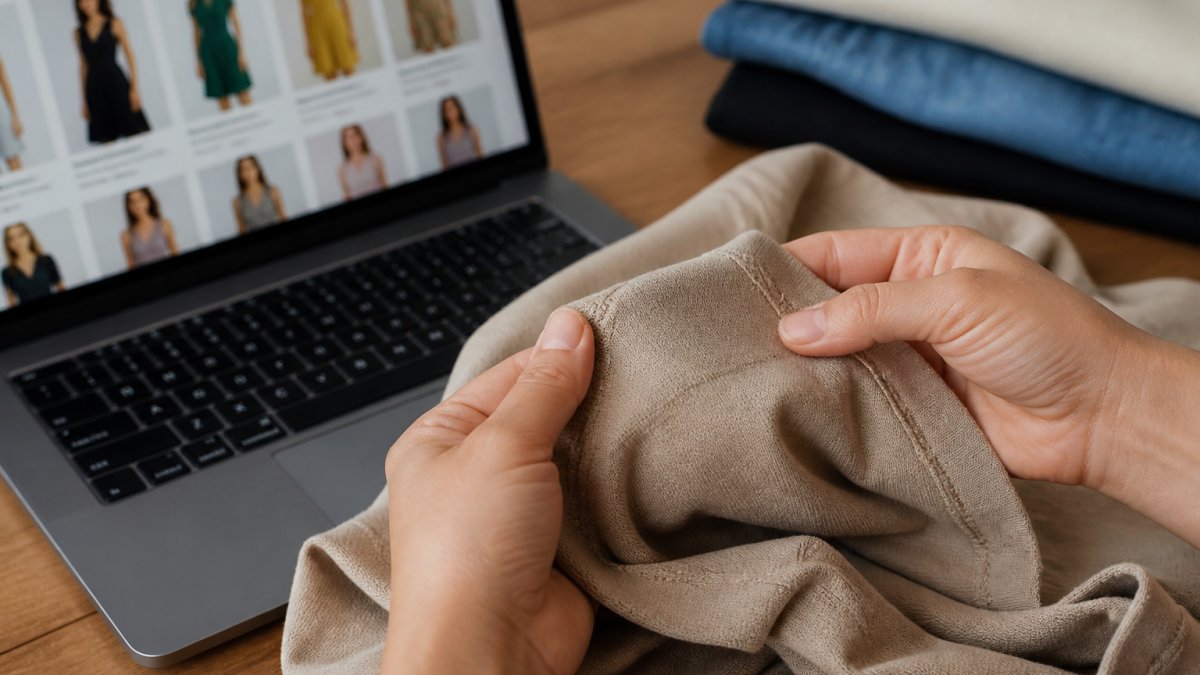
The composition line is the most predictive information on a product page, but only if you read the percentages. "Cotton blend" without numbers is hiding something; "95% cotton, 5% elastane" tells you the garment will hold shape and breathe. Higher natural-fibre content and denser knits resist pilling and distortion better than thin, high-synthetic blends.
Watch for these composition red flags:
- Vague blends with no percentages, often a sign the retailer is sourcing the cheapest available mix.
- Very high polyester content in items marketed as "soft" or "breathable", polyester can be durable, but thin polyester knits pill and trap odour.
- "Viscose" or "rayon" listed without a weight or blend partner, these fibres can shrink and distort unless blended or finished carefully.
Stitching and Construction: What Close-Up Photos Reveal
You cannot feel a garment through a screen, but you can read its construction from good photography:
- Stitch density, even, tight stitching with no visible gaps or loose threads signals better machine settings and quality control. Sparse, wobbly stitching is the most common failure point on fast-fashion seams.
- Seam finishing, serged (overlocked) seams are standard; flatlock or French seams on visible interior areas indicate a higher construction standard.
- Reinforced stress points, bar tacks at pocket corners, belt loops and fly openings, and double-stitched hems, are cheap to add and a reliable marker of a brand that expects the garment to be worn hard.
A common mistake is judging quality by brand name alone. Two items from the same retailer can differ hugely depending on fabric and factory, so check each listing on its own merits.
Quality Differences by Product Category
Quality is not uniform across a store, and the category you shop should change what you check first:
- Basics (tees, knits, loungewear): prioritise fabric weight and fibre content. This is where Uniqlo's reputation is strongest, because its core lines are built around denser knits and consistent composition.
- Denim: check for selvedge or heavier oz weights, reinforced belt loops and bar-tacked pockets. Denim quality varies enormously within a single retailer, so read reviews that mention stretch recovery after washing.
- Occasionwear: construction matters more than fabric weight, look for lining, structured shoulders, invisible zippers and finished interior seams, because these garments are worn less but judged more.
Repairability and Wear Testing: The Longevity Question
Durability is not only about how a garment is made, it is about whether it can be maintained. Before buying, ask: Can the seams be let out or taken in? Are the buttons standard sizes that can be replaced?
Wear testing is hard to verify online, but reviews are a proxy.
Cost Per Wear: The Real Value Test
Cost per wear is the simplest way to compare value: divide the price by the number of times you expect to wear the item.
A $15 tee worn 10 times before it pills costs $1.50 per wear. A $40 tee worn 100 times costs $0.40 per wear, less than a third as much, despite the higher sticker price.
A Transparent Comparison Method
To keep brand comparisons honest, use the same checklist for every retailer: composition percentages listed, fabric weight or gsm shown, close-up construction photos, review evidence of washing durability, and a stated returns window. A brand that scores well on all five is a safer quality bet than one with a strong reputation but vague listings.
Sizing, Fit and Size Inclusivity Compared
Sizing is where most Shein alternatives differ most, and where returns become a real cost. A brand that fits you predictably is worth more than one with a wider style range, because every ill-fitting order adds return postage, waiting time and the risk of a no-returns marketplace purchase.
Size Ranges at a Glance
Size inclusivity is not just a headline number, it is whether the range is actually stocked in the categories you buy. Based on publicly listed size charts:
- Uniqlo: runs a consistent own-scale range, typically from XS to XXL or 3XL depending on the line, with separate in-store alteration services for some items. The strength is consistency: once you know your Uniqlo size, repeat buying is predictable. The limitation is that the range is narrower than specialists and varies by region.
- ASOS: offers one of the broadest ranges among high-street retailers, with dedicated Petite, Tall, Maternity and Plus (Curve) lines across its own labels. Fit varies between in-house lines and third-party brands sold on the site, so check the specific brand's size chart rather than assuming ASOS sizing applies.
- Happy Earth: focuses on casual everyday pieces with a more limited size run than mass retailers; check the product page for the current range before assuming availability in your size.
Fit Differences by Category
Even within one brand, fit varies by category:
- Knitwear and tees: tend to run true to size but can relax with wear; if between sizes, size down for a closer fit or up for a relaxed one.
- Denim: the least consistent category across all retailers. Waist sizing varies by rise and fabric stretch; check the stated waist measurement in centimetres or inches rather than the labelled size.
- Occasionwear and tailored pieces: often cut closer to the body and less forgiving; check bust, waist and hip measurements separately rather than relying on a single size label.
A Measurement-First Method
Before ordering from any alternative, take three measurements with a soft tape: bust or chest, natural waist, and hip at the fullest point.
For plus-size and petite shoppers, the practical test is whether the brand stocks your size in the categories you actually wear, not just in a token few styles.
Returns and Fit Risk
Returns policy is part of sizing, because a generous returns window lets you try before you commit. Uniqlo and ASOS publish clear returns windows and terms; check who pays return postage and whether sale items are excluded. Order two sizes only where the returns policy allows it.
Shipping, Returns and Customer Service: What to Expect
Delivery speed and returns policy are part of quality, because a garment that arrives late or cannot be returned has cost you more than the price tag. Uniqlo and ASOS publish clear delivery windows and returns terms, and marketplace sellers on Vinted and Depop set their own conditions, so check each listing.
At Theclothes.club, the aim is a simple, secure and professional experience from order to delivery.
Marketplace listings on Vinted and Depop often have no returns accepted unless the item is not as described. Read the seller's terms before paying, because a poor fit on a no-returns listing is money lost.
Which Alternative Should You Pick?
Pick based on what you are replacing. For everyday basics that last, choose Uniqlo.
For curated fashion and lifestyle products in one order, with competitive value and a free membership for exclusive deals, Theclothes.club is our recommendation.
The challenge is simple: most people keep buying from the same fast-fashion site out of habit and end up replacing the same clothes every season.
Frequently Asked Questions
Which affordable clothing brands have better quality than Shein?
Uniqlo is frequently highlighted for basics that last for years at an accessible price, while ASOS is described as offering a broader range with more consistent quality. Theclothes.club curates fashion and lifestyle products with a quality-first approach and free membership for exclusive deals. If you want trend-led styles without the Shein quality gamble, compare fabric composition, stitching and return policies before ordering, and check customer reviews for real-world feedback on durability.
Are there sustainable and ethical alternatives to Shein that are still affordable?
Yes. Happy Earth offers everyday organic pieces with certifications highlighted by reviewers. Second-hand marketplaces like Vinted and Depop let you shop pre-owned fashion at lower prices while avoiding new fast-fashion production. Thrift and consignment stores are also recommended as budget-friendly routes to quality-made clothing. These options reduce environmental impact and support more responsible labor practices, though availability and condition vary by listing, so check seller ratings and photos carefully.
How can I tell whether an online clothing store offers good quality?
Look at fabric composition first: natural fibres like cotton tend to hold up better than high synthetic blends. Check close-up photos for neat stitching, even seams and secure buttons. Read the size guide and return policy before buying, and scan reviews for mentions of shrinkage, pilling or colour fading. A store that publishes detailed product specifications and offers hassle-free returns is usually more confident in its garment construction and fabric quality.
What should I check before buying clothes from a Shein alternative?
Confirm the size range and fit guidance, especially if you need plus-size fashion or size inclusivity. Check shipping speed and delivery estimates, and read the returns policy for costs and timeframes. Compare cost per wear rather than sticker price: a slightly pricier staple you wear weekly often beats a cheap trend piece worn twice. Finally, verify the retailer is legitimate by checking contact details, customer service channels and independent reviews before you shop.


